
Graduate in One Year: Is It Possible? Everything You Need to Know
In today’s fast-paced world, many students and working professionals are looking for ways to complete their education quickly. One of the most searched topics is "Graduation in One Year." Whether you want to improve your career prospects, qualify for government jobs, or pursue higher education, earning a bachelor's degree in less time sounds appealing. But is it really possible? Let's explore the facts, eligibility, benefits, and important considerations.
What Does "Graduation in One Year" Mean?
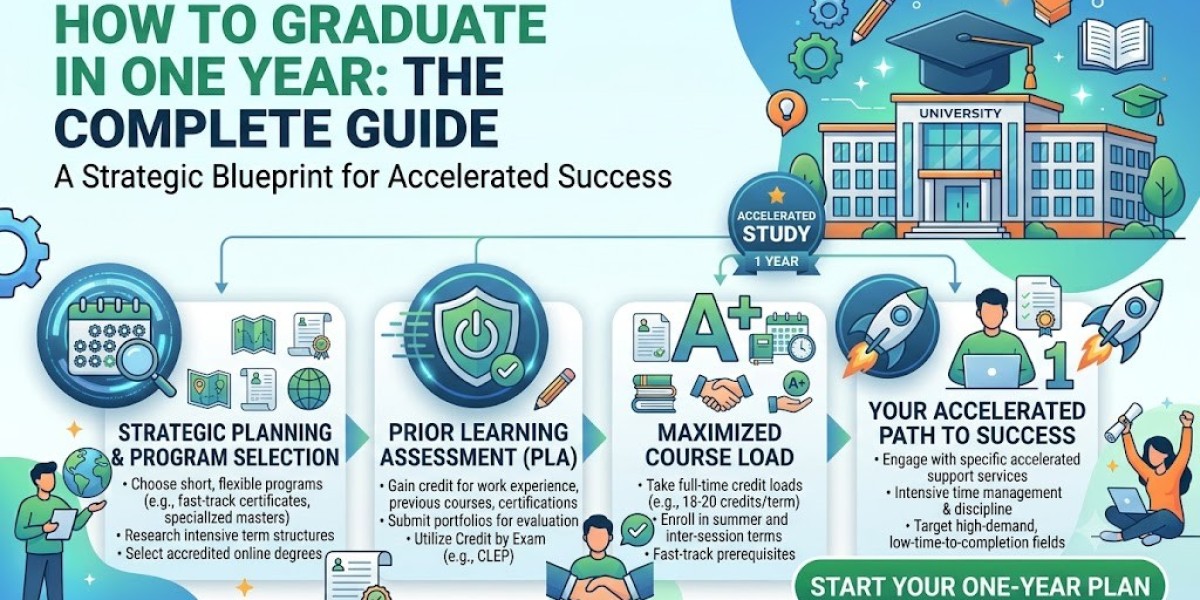
Graduation in one year generally refers to completing a bachelor's degree within a year through valid academic provisions rather than attending a traditional three- or four-year program. This option is mainly available for individuals who have previously discontinued their studies, have academic credits from another university, or qualify under credit transfer or recognition of prior learning (RPL) policies.
It is important to understand that a student cannot usually enroll in a regular bachelor's degree and legally complete it in just one year from scratch. Any institution promising a full degree in one year without meeting university or regulatory guidelines should be approached with caution.
Who Can Apply?
A one-year graduation pathway may be suitable for:
Students who discontinued their graduation due to personal or financial reasons.
Learners with previous academic credits from a recognized university.
Working professionals seeking to complete an unfinished degree.
Individuals looking to improve their qualifications for promotions or career growth.
Candidates planning to pursue postgraduate programs after completing graduation.
Eligibility requirements vary depending on the university and the academic framework under which admission is offered.
How Does It Work?
Universities offering accelerated completion options may evaluate a student's previous education and award credits for completed coursework. The remaining credits are then completed through approved academic methods such as distance learning, online education, or blended learning.
The process generally includes:
Evaluation of previous academic records.
Verification of eligibility for credit transfer or RPL.
Admission into the appropriate semester or academic stage.
Completion of remaining coursework and examinations.
Award of the degree after fulfilling all academic requirements.
Students should always verify that the university follows recognized academic regulations.
Benefits of Graduation in One Year
1. Faster Career Growth
Completing your degree quickly allows you to apply for better job opportunities and promotions without waiting several years.
2. Higher Education Opportunities
A bachelor's degree is the minimum qualification for many postgraduate courses such as MBA, MCA, MA, M.Com, and MSc.
3. Better Salary Prospects
Graduates generally receive higher salaries than candidates with only school-level qualifications.
4. Flexible Learning
Many universities provide online or distance learning options that allow students to study while continuing their jobs.
5. Saves Time
For eligible candidates who have already completed part of their education, accelerated completion avoids repeating previously studied subjects.
Popular Courses Available
Depending on the university, students may complete programs such as:
Bachelor of Arts (BA)
Bachelor of Commerce (BCom)
Bachelor of Business Administration (BBA)
Bachelor of Computer Applications (BCA)
Bachelor of Science (BSc)
Course availability depends on university policies and eligibility criteria.
Things to Check Before Taking Admission
Before enrolling, students should carefully verify the following:
The university is recognized by the appropriate regulatory authorities.
The degree is valid for employment and higher education.
The admission process follows official academic regulations.
The institution provides transparent information regarding eligibility and credit transfer.
There are no unrealistic promises such as "guaranteed degree without exams" or "degree in 30 days."
Conducting proper research helps avoid fraudulent institutions and protects your academic future.
Is Graduation in One Year Valid?
The validity depends entirely on the university, the academic pathway used, and compliance with applicable educational regulations. Degrees obtained through recognized universities using approved mechanisms such as credit transfer or recognition of prior learning may be accepted according to institutional and regulatory rules.
Students should always confirm recognition directly with the university before applying.
Who Should Consider This Option?
Graduation in one year can be beneficial for:
Working professionals
Business owners
Government job aspirants
Students who discontinued their education
Individuals planning to study abroad after completing graduation
Professionals seeking career advancement
However, it is not suitable for fresh students who have never started a bachelor's program unless a recognized accelerated pathway specifically applies.
Common Misconceptions
Many people believe that anyone can obtain a bachelor's degree in one year regardless of educational background. This is not true. Legitimate universities require students to meet eligibility criteria and complete all required academic credits.
Similarly, advertisements promising degrees without attending classes, submitting assignments, or appearing for examinations should be viewed with skepticism.
Final Thoughts
Graduation in one year can be an excellent opportunity for eligible students who want to complete an unfinished degree and move forward in their careers. It offers flexibility, saves time, and opens doors to better employment and higher education. However, choosing a recognized university and understanding the admission process are essential to ensuring the degree holds value.
Before making a decision, carefully review the university's eligibility requirements, recognition status, and academic policies. A well-informed choice today can help you build a stronger academic foundation and create better career opportunities in the future.