
Understanding your health often begins with knowing what is happening inside your body. Laboratory testing can provide useful information about areas such as blood sugar, cholesterol, hormones, vitamins, organ function, and other health markers. However, with many testing options now available, people may wonder which tests are appropriate, how the process works, and whether testing without a traditional doctor's visit is right for them.
Direct to consumer lab testing gives individuals another way to access certain laboratory tests and learn more about their health. In this guide, we explain how direct to consumer lab testing works, what types of tests may be available, what to consider before ordering a test, and why professional guidance can be important when interpreting results. The goal is to help you make informed decisions about testing and ongoing healthcare.
What Is Direct to Consumer Lab Testing?
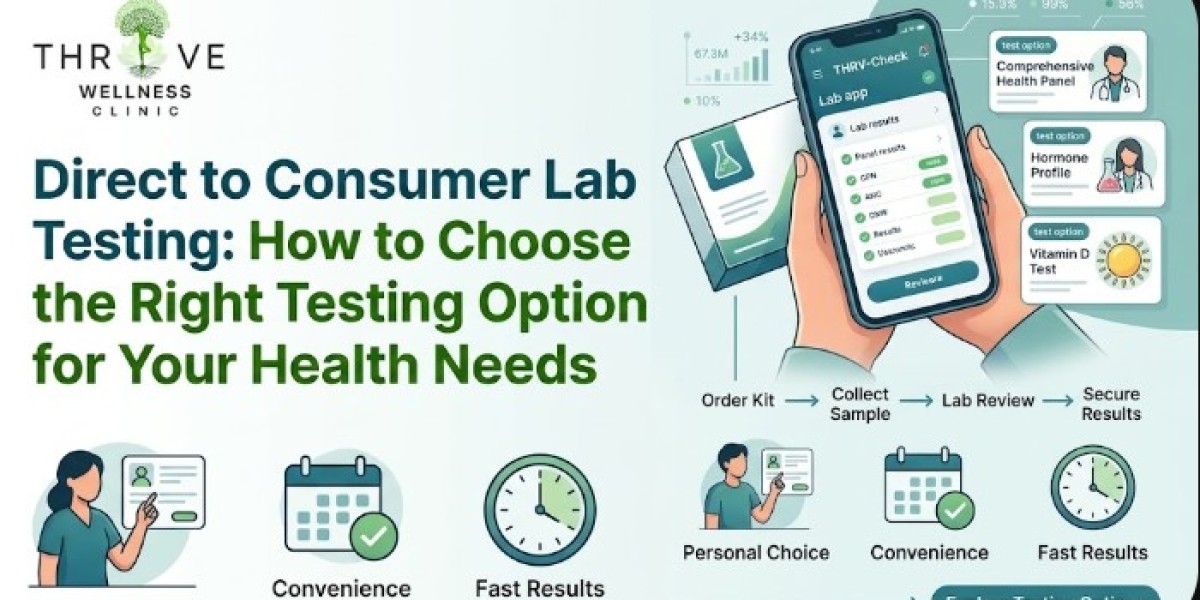
Direct to consumer lab testing allows individuals to request certain laboratory tests without necessarily receiving a traditional doctor's order first. Depending on the provider and location, testing may involve visiting a laboratory, using an at-home collection kit, or completing another approved sample-collection process. Results are generally provided through a secure online portal or another communication method.
With direct to consumer lab testing, people can explore specific health markers based on their concerns and healthcare goals. However, access to a test does not necessarily mean that everyone needs it. Choosing tests based on symptoms, medical history, age, medications, risk factors, and guidance from a qualified healthcare professional can help prevent unnecessary testing or confusion about results.
Why Do People Consider Direct to Consumer Testing?
People seek laboratory testing for many different reasons. Some want to monitor an existing health concern, while others are interested in preventive health or establishing a baseline before discussing their health with a provider.
Common reasons may include:
- Monitoring blood glucose or cholesterol
- Reviewing hormone-related health markers
- Checking certain vitamin or nutrient levels
- Understanding general wellness markers
- Following up on previously abnormal results
- Supporting preventive healthcare discussions
- Tracking selected health markers over time
Direct to consumer lab testing can offer convenience, but results should always be considered within the context of the individual's overall health. A single laboratory value may not provide a complete picture, and abnormal results may require additional evaluation.
What Types of Tests May Be Available?
The specific tests available depend on the laboratory, healthcare provider, regulations, and the individual's location. Some services may offer individual tests, while others provide panels containing several related markers.
Depending on the testing program, options may include blood tests related to:
- Cholesterol and lipid levels
- Blood glucose and metabolic health
- Complete blood counts
- Thyroid-related markers
- Hormone levels
- Vitamin and nutrient status
- Liver and kidney function
- Certain inflammation or wellness markers
When considering direct to consumer lab testing, focus on the health question you are trying to understand rather than simply choosing the largest or most comprehensive panel. More testing is not automatically better, and some results may require professional interpretation or follow-up testing.
How to Choose the Right Testing Option
Choosing a laboratory test should begin with a clear reason for testing. Think about whether you are monitoring a known concern, investigating a symptom, completing preventive screening, or tracking a health marker that has previously been abnormal.
Before selecting direct to consumer lab testing, consider factors such as:
- What health question the test is designed to address
- Whether the test is appropriate for your age and circumstances
- How the sample will be collected
- Whether fasting is required
- How results will be delivered
- Whether professional result interpretation is available
- Whether abnormal findings can be followed up with a healthcare provider
- The total cost and what is included
A reputable testing service should clearly explain what a test measures and what its limitations are. If you take prescription medications, have a chronic condition, are pregnant, or have significant symptoms, discuss testing with a qualified healthcare professional before relying on results to make healthcare decisions.
Understanding and Interpreting Your Results
Receiving laboratory results can provide useful information, but interpreting them correctly is equally important. Reference ranges can differ between laboratories, and results may be influenced by factors such as age, sex, medications, fasting status, timing, recent illness, exercise, and other individual circumstances.
Direct to consumer lab testing can give you access to valuable health information, but a result outside a reference range does not automatically mean that you have a medical condition. Similarly, a result within a reference range does not always rule out a health concern. Professional interpretation can help connect laboratory findings with symptoms, medical history, physical examination, and other relevant information.
Our Membership Program for Ongoing Personalized Care
Our membership program is designed for people who want more convenient and continuous support rather than relying only on occasional healthcare visits. Members can benefit from access to at-home healthcare services, ongoing wellness monitoring, and personalized care that considers their individual health needs and goals. This approach can make it easier to stay engaged with preventive health and maintain continuity with a healthcare team.
Ongoing membership-based care can also support preventive health planning and long-term health optimization through regular monitoring and individualized guidance. Rather than treating each laboratory result as an isolated piece of information, continuous care provides an opportunity to review changes over time and adjust a healthcare plan when appropriate. While no healthcare program can guarantee a particular outcome, consistent access and communication can make proactive health management more convenient.
When Should You Talk With a Healthcare Professional?
Laboratory testing can be useful, but it should not replace appropriate medical evaluation. If you have persistent, worsening, or unexplained symptoms, professional assessment may be more appropriate than ordering individual tests on your own.
You should consider speaking with a qualified healthcare professional when you:
- Have symptoms that are new or persistent
- Receive an unexpected or abnormal laboratory result
- Take medications that may affect test results
- Have an existing medical condition
- Need help deciding which tests are appropriate
- Are considering significant changes to treatment or supplements
- Need additional testing after an abnormal finding
A healthcare professional can help determine whether a laboratory test is appropriate and explain what the results may mean in the context of your overall health.
Lifestyle and Preventive Health Strategies
Laboratory testing is only one part of maintaining health. Results can be more useful when considered alongside everyday habits and preventive healthcare. Healthy routines can support overall well-being while helping you monitor changes that may deserve professional attention.
Practical strategies include:
- Eating a balanced, nutrient-rich diet
- Staying physically active according to your abilities
- Maintaining a consistent sleep routine
- Drinking adequate fluids
- Managing stress through healthy coping strategies
- Attending recommended preventive screenings
- Keeping track of relevant health measurements
- Following an individualized healthcare plan
Direct to consumer lab testing may help provide measurable information, but lifestyle choices and appropriate medical care remain important parts of long-term health management.
Frequently Asked Questions
What is direct to consumer lab testing?
Direct to consumer lab testing allows individuals to access certain laboratory tests without always needing a traditional doctor's order. Depending on the service, testing may take place at a laboratory or through an approved at-home sample collection process.
Who may benefit from direct to consumer lab testing?
People interested in monitoring selected health markers or preparing for a healthcare discussion may find this type of testing convenient. The appropriate tests depend on individual health circumstances, and professional guidance may be necessary for interpretation.
Can I order laboratory tests online?
Some testing providers allow eligible individuals to select and purchase certain tests online. Availability, requirements, and collection methods vary by location and provider.
Can laboratory results diagnose a health condition?
A laboratory result alone does not necessarily establish a diagnosis. Healthcare professionals typically consider symptoms, medical history, examination findings, and other information before determining what a result means.
What should I do if my test result is abnormal?
Do not assume that an abnormal result automatically means you have a disease. Discuss the finding with a qualified healthcare professional, who can determine whether repeat testing, additional evaluation, or another appropriate step is needed.
Can testing be part of preventive healthcare?
Yes. Certain laboratory tests may be used as part of preventive health monitoring when they are appropriate for an individual's age, risk factors, symptoms, and healthcare needs. A healthcare professional can help determine which evaluations are relevant.
Conclusion
Direct to consumer lab testing can provide convenient access to selected health information and may help individuals become more informed about their wellness. The most useful approach is to choose testing based on a clear health purpose, understand what each test measures, and interpret results in the context of individual circumstances. Testing should complement—not replace—appropriate professional healthcare.
If you are looking for convenient, personalized support with laboratory testing, preventive health, or ongoing wellness monitoring, consider exploring healthcare services that provide professional guidance alongside testing. Taking a proactive approach can help you better understand your health information and make informed decisions about your ongoing care.