
A Bachelor of Technology (BTech) is one of the most popular undergraduate qualifications for students interested in engineering, technology, computing, electronics, and other technical fields. With growing demand for technology professionals, many learners are searching for flexible ways to pursue a BTech while managing work, family, or other commitments.
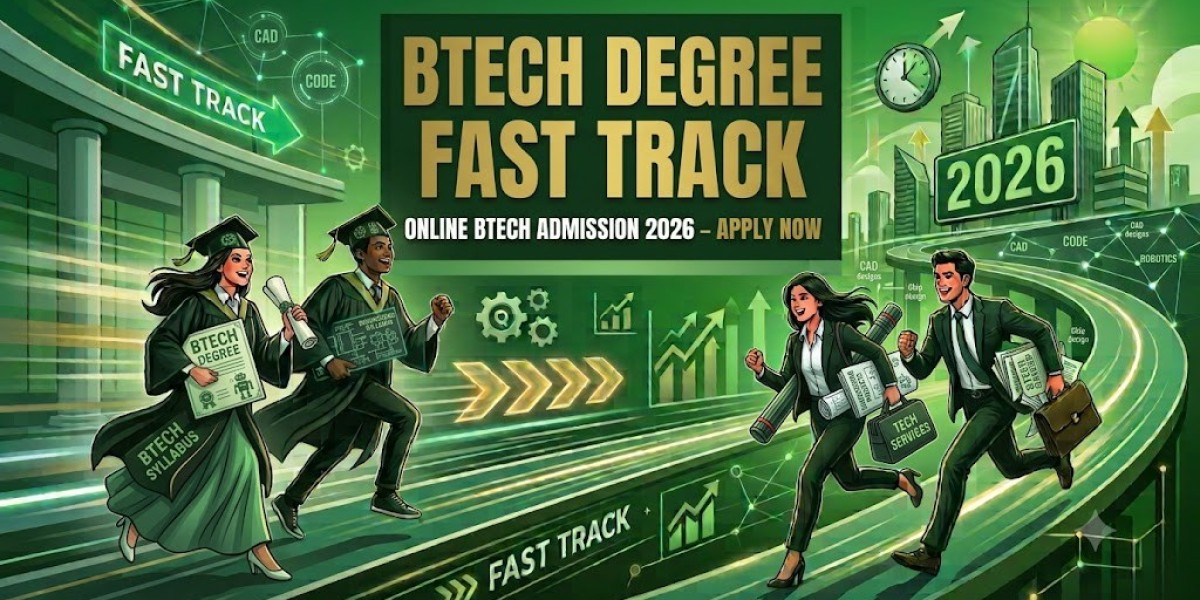
This has also increased interest in BTech Degree Fast Track and Online BTech Admission 2026 options. However, BTech is a professional technical qualification, and students should carefully verify whether a particular online, distance, or accelerated format is legally and academically permitted before applying.
Rather than choosing a program based only on speed, applicants should consider institutional recognition, program approval, practical requirements, eligibility, curriculum, and future career opportunities.
What Is a BTech Degree?
Bachelor of Technology is an undergraduate technical degree that provides specialized education in engineering and technology. Depending on the branch, students may study areas such as computer science, information technology, electronics, mechanical engineering, civil engineering, electrical engineering, or other technical disciplines.
A BTech curriculum generally combines:
Engineering fundamentals
Mathematics and science
Technical theory
Laboratory work
Projects
Practical training
Industry-oriented skills
The exact curriculum and duration depend on the specialization and institution.
What Does “BTech Fast Track” Mean?
The phrase BTech Degree Fast Track can be used by education providers to describe an accelerated pathway, lateral-entry route, credit-based progression, or another alternative academic structure.
Students should not assume that every course marketed as “fast track” is equivalent to a standard BTech program.
The official duration and academic requirements of a technical degree are determined by applicable regulations and the institution's approved program structure. Before admission, ask the university to clearly explain the course duration, eligibility, credits, examinations, practical components, and mode of delivery.
Can You Pursue an Online BTech in 2026?
This is one of the most important questions for prospective students.
Students should not assume that a regular BTech degree can simply be converted into an online or distance-learning program. Engineering and technology programs can involve laboratory, workshop, practical, and hands-on components that require specific academic arrangements.
Therefore, if you see an advertisement for Online BTech Admission 2026, verify the exact program and its regulatory status before paying any fees.
Check:
The degree-awarding institution
The exact BTech branch
The approved mode of study
Program recognition or approval
Practical and laboratory requirements
Examination structure
Eligibility requirements
Validity for your intended career or higher studies
Why Do Students Look for Fast Track BTech Programs?
Students may search for accelerated or flexible BTech options for several reasons.
Working Professionals
People already employed in technical or non-technical roles may want to obtain an undergraduate qualification without leaving their jobs.
Students With Previous Qualifications
Learners who hold a relevant diploma or other qualification may explore legitimate pathways such as lateral entry where applicable.
Career Advancement
Employees who have technical experience but lack a relevant undergraduate degree may look for further education to improve their academic profile.
Flexible Learning Requirements
Some learners need education that fits around work, family, or geographical limitations.
However, flexibility should never come at the expense of degree recognition or academic quality.
BTech Admission 2026: Eligibility
BTech eligibility depends on the branch, institution, admission route, and applicable regulations.
For a conventional BTech program, students commonly need to meet requirements relating to senior secondary education, subjects such as mathematics and physics where applicable, and minimum marks.
Some institutions and admission routes may also consider:
Engineering entrance examination scores
State-level admission requirements
Institution-specific entrance tests
Diploma qualifications for lateral entry
Previous academic credits
Students should check the official admission notification for the specific BTech program they want to pursue.
BTech Fast Track Admission Process
If you are exploring BTech admission for 2026, follow a careful verification process.
1. Identify the Exact Program
Determine the engineering branch you want to study, such as Computer Science, Mechanical, Civil, Electrical, or Electronics.
2. Check the Institution
Research the university or institution awarding the degree and verify its current regulatory and accreditation status.
3. Verify the Learning Mode
Do not assume that a program advertised as online is equivalent to a conventional BTech. Confirm the officially permitted mode of delivery.
4. Review Eligibility
Check your Class 12 subjects, marks, diploma qualifications, entrance requirements, and other applicable conditions.
5. Understand the Course Structure
Review the duration, credits, practical sessions, laboratories, projects, examinations, and internship requirements.
6. Complete the Official Application
Use the institution's official admission portal or authorized process and submit accurate documentation.
Popular BTech Specializations
Depending on the institution, students may find BTech programs in areas such as:
Computer Science Engineering
This branch focuses on programming, algorithms, software development, databases, computer networks, and related technologies.
Information Technology
IT programs emphasize computing systems, software, information management, networks, and digital technologies.
Electronics and Communication Engineering
Students learn about electronics, communication systems, digital circuits, signals, and related technologies.
Mechanical Engineering
This field covers machines, manufacturing, mechanics, thermodynamics, design, and industrial systems.
Civil Engineering
Civil engineering focuses on construction, infrastructure, structural systems, transportation, and environmental aspects of the built environment.
Electrical Engineering
Students study electrical systems, circuits, power systems, machines, control systems, and related technologies.
The availability of each specialization depends on the institution and applicable approvals.
Career Opportunities After BTech
A BTech can provide a foundation for a broad range of technical careers.
Depending on their specialization and skills, graduates may pursue roles such as:
Software Developer
Web Developer
Systems Engineer
Network Engineer
Data Analyst
Technical Support Engineer
Design Engineer
Electrical Engineer
Civil Engineer
Mechanical Engineer
Project Engineer
Quality Engineer
Practical experience, internships, certifications, communication skills, and specialization can significantly influence career opportunities.
Higher Studies After BTech
BTech graduates can also pursue higher education. Depending on their specialization and eligibility, options may include:
MTech
MBA
MSc or technology-related postgraduate programs
Specialized data science programs
Artificial intelligence courses
Cybersecurity programs
Cloud computing certifications
Professional technical certifications
Students interested in postgraduate education should check the eligibility requirements of their preferred institution.
Important Things to Check Before Online BTech Admission 2026
The phrase “Online BTech” should not be accepted at face value. Before enrolling, carefully investigate the program.
Verify Recognition and Approval
Check whether the specific institution and BTech program are permitted in the advertised mode.
Check Practical Training
Engineering education can involve laboratory work, workshops, projects, and practical training. Understand how these components are delivered.
Confirm Duration
Ask whether the advertised “fast track” duration is officially applicable to your admission route.
Review the Curriculum
Compare the syllabus with similar conventional BTech programs and your intended career field.
Check Future Acceptance
If you intend to apply for a government position, postgraduate course, professional certification, or regulated role, verify whether the qualification satisfies its requirements.
Understand the Fees
Ask for the complete fee structure, including tuition, examinations, practical sessions, registration, projects, and other charges.
Beware of Unrealistic Fast-Track Claims
Students searching for a BTech Degree Fast Track should be cautious about advertisements promising a complete engineering degree in an unusually short period without clearly explaining the academic pathway.
A legitimate qualification should have a transparent academic structure, clearly defined eligibility, appropriate assessment, and valid recognition.
If an institution cannot clearly explain who awards the degree, what the approved duration is, how practical requirements are completed, or whether the program is authorized in its advertised mode, consider that a warning sign.
Final Thoughts
A BTech Degree Fast Track can sound appealing to students and working professionals looking for a quicker or more flexible route to technical education. However, BTech is a professional engineering qualification, so recognition, academic structure, practical training, and regulatory compliance are especially important.
If you are considering Online BTech Admission 2026, research the exact institution and program carefully. Verify the learning mode, eligibility, duration, curriculum, practical requirements, and applicable approvals before paying admission fees.
The best BTech program is not necessarily the one that promises the fastest completion. It is the one that provides a credible qualification, relevant technical education, practical exposure, and a strong foundation for your intended career.