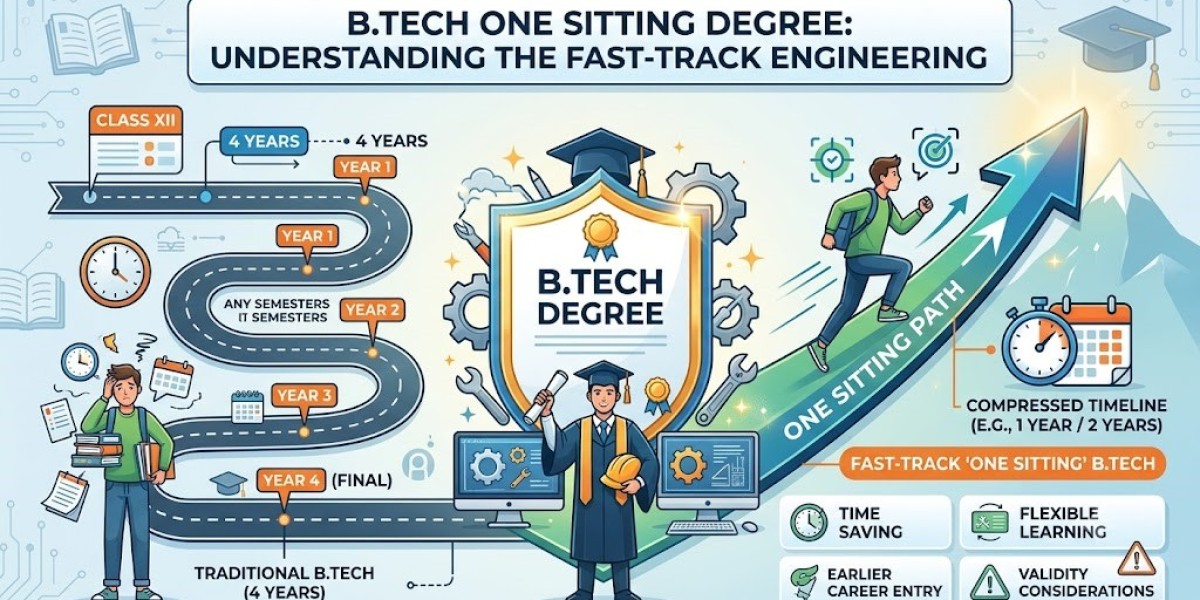

Engineering is one of the most popular career fields, offering opportunities in technology, construction, manufacturing, software development, research, and many other industries. A Bachelor of Technology (B.Tech) degree is considered one of the most valuable qualifications for students who want to establish a career in engineering and technical fields.
Many working professionals and individuals who could not complete their engineering education look for flexible options to continue their studies. Among these options, the term B.Tech One Sitting Degree is frequently searched by candidates who want to complete an engineering qualification in a shorter period.
Before choosing such a program, it is important to understand what a B.Tech One Sitting Degree means, its recognition, eligibility, career scope, and the factors that should be considered before enrollment.
What Is a B.Tech One Sitting Degree?
A Bachelor of Technology (B.Tech) is a professional undergraduate engineering program that usually involves several years of academic study, practical training, laboratory work, projects, and examinations.
The term B.Tech One Sitting Degree generally refers to programs that claim to provide a B.Tech qualification by allowing candidates to complete the degree requirements in a single sitting or through an accelerated process.
Such programs are often promoted for working professionals, diploma holders, or individuals who have discontinued their engineering studies. However, candidates should carefully verify whether the program is approved and recognized by the appropriate educational authorities before applying.
A genuine engineering qualification must follow required academic standards, including curriculum, practical learning, assessments, and institutional approval.
Why Do Students Search for B.Tech One Sitting Programs?
There are several reasons why candidates explore flexible engineering degree options:
1. Career Advancement
Many professionals working in technical fields want a formal engineering qualification to improve their career opportunities, apply for higher positions, or meet job requirements.
2. Completing an Interrupted Education
Some students are unable to complete their engineering studies due to financial difficulties, employment responsibilities, or personal circumstances. They may search for alternative learning options to continue their education.
3. Professional Growth
A B.Tech degree can help professionals strengthen their technical knowledge and improve their chances of moving into specialized roles.
4. Higher Education Opportunities
A recognized engineering degree can provide a foundation for advanced studies, certifications, and specialization in technical domains.
Importance of a B.Tech Degree
A B.Tech program develops technical knowledge, problem-solving abilities, and practical skills required in engineering careers.
Technical Knowledge
Students learn engineering concepts related to areas such as computer science, mechanical engineering, civil engineering, electronics, electrical engineering, and other specialized fields.
Practical Skills
Engineering education includes laboratory work, projects, design activities, and practical applications that prepare students for industry challenges.
Professional Development
A B.Tech degree helps students develop analytical thinking, innovation skills, teamwork abilities, and technical expertise.
Career Opportunities
Engineering graduates are employed across industries such as IT, infrastructure, manufacturing, telecommunications, energy, research, and technology services.
Career Opportunities After B.Tech
A recognized B.Tech degree can open opportunities in various professional fields.
Software Engineer
Graduates from computer science and related engineering fields can work in software development, programming, application development, and technology solutions.
Civil Engineer
Civil engineering graduates can work in construction, infrastructure development, project management, and structural design.
Mechanical Engineer
Mechanical engineers can explore careers in manufacturing, automotive industries, product design, and industrial operations.
Electronics Engineer
Electronics graduates can work in areas such as communication systems, embedded technology, automation, and electronic design.
Technical Consultant
Experienced engineers may work as technical consultants, providing expertise to organizations on engineering projects and solutions.
Is a B.Tech One Sitting Degree Valid?
The validity of a B.Tech One Sitting Degree depends on the recognition of the institution and whether the program follows approved educational regulations.
Before enrolling, candidates should check:
Whether the university or institution is officially recognized.
Whether the engineering program has required approvals.
Whether the degree is accepted by employers and educational institutions.
Whether the course includes proper academic requirements, examinations, and practical training.
Candidates should be cautious of programs that promise a technical degree without meeting standard engineering education requirements.
Things to Consider Before Choosing a B.Tech Program
Check University Recognition
Always verify the credibility and recognition status of the university offering the degree. Recognition plays an important role in employment and further education.
Review Course Structure
A quality B.Tech program should include engineering subjects, laboratory sessions, projects, assessments, and practical exposure.
Understand Eligibility Requirements
Different engineering programs have specific eligibility criteria based on previous education, qualifications, and admission rules.
Consider Your Career Goals
Students should choose programs that align with their professional plans, whether they want employment, entrepreneurship, research, or higher studies.
Difference Between Regular B.Tech and Accelerated Options
A regular B.Tech program provides structured learning through classroom education, laboratory practice, industrial exposure, and project work. These elements are essential for developing engineering skills.
Programs advertised as “one sitting” or extremely short-duration degrees should be carefully evaluated because engineering is a practical discipline that requires technical training and hands-on experience.
Choosing a properly recognized engineering program helps ensure that the qualification has long-term value.
Future Scope of Engineering Education
Technology continues to transform industries worldwide, increasing demand for skilled engineers in fields such as artificial intelligence, renewable energy, automation, cybersecurity, robotics, and advanced manufacturing.
Engineering professionals who continuously update their knowledge and develop practical skills can find opportunities in both traditional and emerging industries.
A recognized B.Tech qualification combined with technical expertise can provide a strong foundation for career growth.
Conclusion
A B.Tech One Sitting Degree may seem like a convenient option for individuals looking for a faster engineering qualification, but candidates should carefully verify the recognition, credibility, and acceptance of any such program before making a decision.
A legitimate B.Tech degree requires proper academic learning, technical training, and practical experience. Choosing a recognized engineering program ensures better career opportunities and supports long-term professional development.
For aspiring engineers, the right education, skill development, and continuous learning are essential steps toward building a successful career in the technology-driven world.